
Many customers talk to an AI chatbot and walk away with a less-than-ideal experience. So, what makes an AI chatbot agent worth it?
The answer is simpler than most people expect: a good AI chatbot knows what it can solve and when to step aside because an issue is too complex.
AI chatbots are now a normal part of customer service, and customers usually judge them on one thing: whether their problem gets solved without frustration.
Many companies, retailers, and banks have shifted to using AI chatbots for customer support. This includes Internet Service Providers (ISPs), where support teams now place chatbots at the front of the experience. That is why it is essential for companies to understand how AI chatbots work in support, so they can use them to the best of their abilities.
What Exactly Is an AI Chatbot?
Think of it as a regular bot powered by artificial intelligence (AI). In simple terms, it is a program that understands a customer’s questions and replies in a conversational way.
While there are several types of chatbots, these are the main ones customers should know about:
- Menu-style bots: These chatbots follow a set script. The customer communicates through pre-set menus, which makes it easier for the bot to identify the issue and solve it.
- Agentic bots: These are newer chatbots that can interpret what the customer is asking and answer free-form questions. They are highly interactive, so customers can ask them almost anything related to the service or product and get a relevant answer.
One common misconception is that deploying an AI chatbot is hard. In reality, a small business owner can create, train, and deploy an AI support agent within a week.
All you need is a no-code or low-code chatbot platform, a business knowledge base, and a reliable internet connection so every process runs smoothly. If you’re looking for a fiber-backed plan tailored to your needs, Spectrum Customer Service can help you find the right option.
What Can Chatbots Do Well?
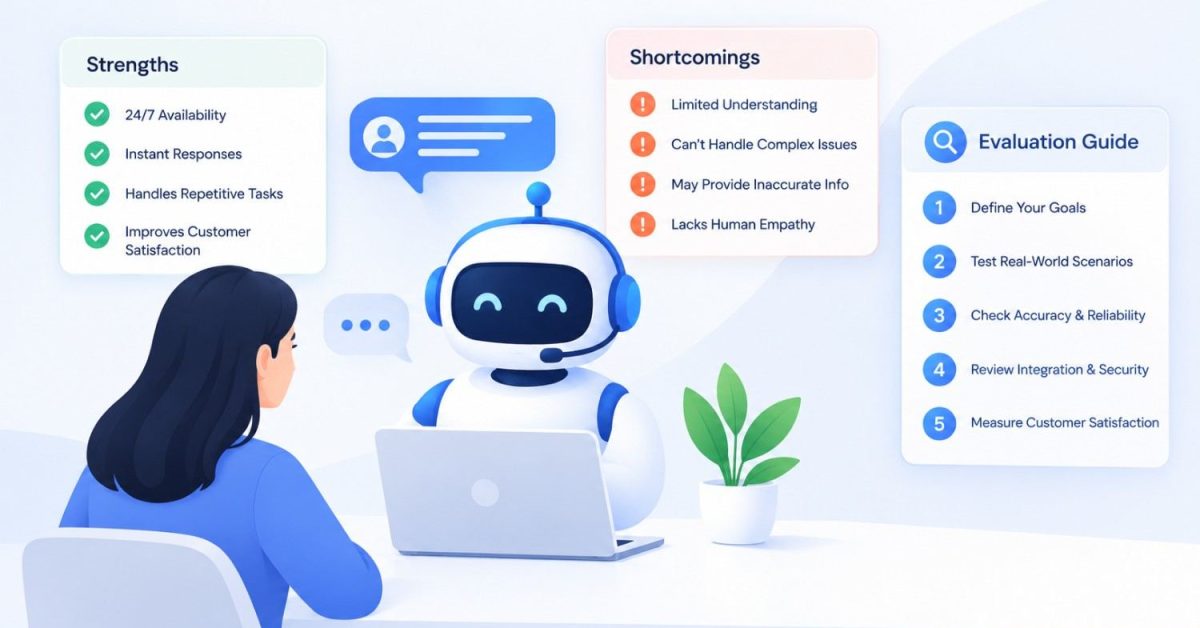
Several factors give an AI chatbot an edge over human-only support:
- 24/7 availability: A chatbot is available round the clock, so customers don’t face hold times that would normally cause frustration.
- Routine questions: AI chatbots handle common requests such as order status, password resets, store hours, and account basics, and point customers in the right direction when they’re stuck.
- Consistency: Chatbots give precise, consistent answers, with no mood swings or rushed calls.
- Better use of human agents: Because bots handle routine requests, complex questions and issues can go to human representatives. This frees up their bandwidth so they can help more customers each day.
For small teams, these benefits are a big reason why AI tools for small business customer communication have become so popular.
Where Do Chatbots Fall Short?
Chatbots aren’t always sunshine and rainbows. There are some situations where they can fail:
- Complex problems: Unusual or multi-part problems can confuse the bot because they don’t fit a standard answer.
- Emotional situations: Bots struggle with situations like billing disputes and service failures, where empathy matters a lot.
- Wrong answers: Though AI chatbots seem confident, they can give incorrect answers. This is a well-known AI problem called hallucination, which is why the model needs to be trained well enough to minimize errors.
- Dead-end loops: Sometimes a chatbot keeps repeating options and never offers a real solution. This kind of failure can damage the company’s reputation.
How to Test a Customer Service Chatbot
Testing a chatbot takes three simple steps to figure out whether it is good enough for deployment:
- Answer: Check whether the chatbot can handle simple, common questions with ease. Pay attention to how long it takes to respond and how accurate the response is.
- Route: When the chatbot can’t provide a proper answer, does it redirect the customer to the right place, such as the relevant department, or does it just restart the chat?
- Hand off: If the conversation doesn’t reach a conclusion, is it easy to reach a human representative? Also check whether the human agent receives all the necessary information, so the customer doesn’t have to repeat themselves.
Keep in mind that most customer frustration happens in the last two stages (routing and handoff), not the first. A bot can answer well but still fail if it can’t route and hand off the conversation successfully.
Some consumer-focused resources, such as LocalCableDeals, offer an AI chatbot that helps customers compare providers, find options available at their address, and connect with the right support line.
Businesses that want a chatbot built around these three stages from the start can also work with a team that specializes in AI agent development.
Tips for Customers Using a Chatbot
Here are some useful tips for getting better results from a customer service chatbot:
- Keep questions short and specific. Long messages tend to confuse bots, which can result in poor answers.
- Ask for a human. Typing “agent” or “representative” can often route the chat to a human representative.
- Save the conversation. Saving or screenshotting the chat keeps a record in case you need to escalate.
- Get a reference number. Asking for a reference or case number at the end of the conversation helps you avoid repeating your story later.
Final Thoughts
AI chatbots are most valuable when they solve routine problems quickly and know when to hand off to a human. For customers, the tips above make it easier to judge whether a chatbot is actually helpful. For companies, testing how well a bot answers, routes, and hands off conversations is the best way to keep improving the customer service experience.
