
Hundreds of thousands of prospecting emails are sent every day by mid-market sales teams scrambling to capture fragmented buyer attention. When revenue operations specialists rely on manual data entry and disjointed spreadsheets, deals stall before they ever reach a discovery call.
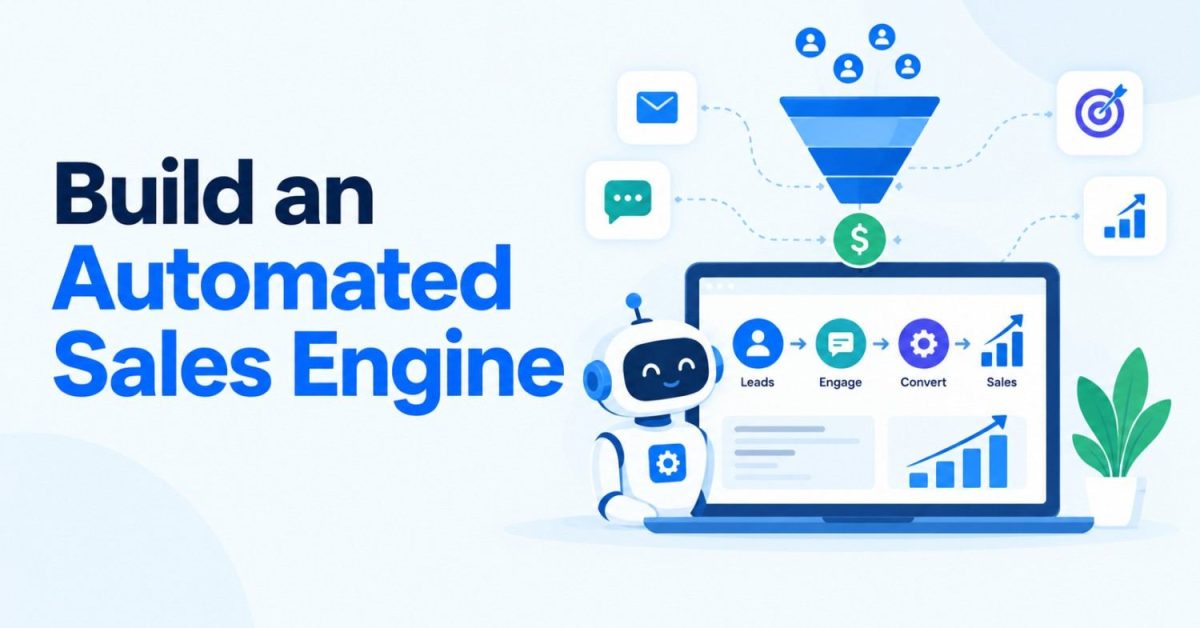
Modern sales organizations cannot afford the revenue leakage caused by slow follow-up times and disconnected communication channels. Building a scalable automated sales engine eliminates friction, aligns marketing signals with direct outreach, and transforms chaotic pipelines into predictable revenue generators.
Defining Core Pipeline Components
To build a resilient revenue machine, you must first audit every stage of your existing pipeline, from the initial touchpoint to the closed deal. Disjointed data structures inevitably create blind spots where hot leads slip through the cracks unnoticed.
Mapping your operational stages clarifies exactly where handoffs occur between marketing qualification and direct sales engagement. Without this foundational clarity, automation tools merely accelerate inefficiencies instead of solving structural bottlenecks. Establishing clear definitions early prevents costly misalignment down the road.
Identifying Common Lead Generation Bottlenecks
Outbound teams frequently waste countless hours chasing dead accounts because prospect data decays at an alarming rate across digital directories. Manual research slows down outbound velocity, and it burns out talented sales representatives who should be focusing on closing conversations.
Eliminating these friction points requires automated data enrichment and standardized qualification rules. Here are the core obstacles that derail scaling efforts:
- Outdated contact details that bounce before reaching decision-makers
- Fragmented tracking systems that hide real-time prospect engagement
- Slow lead routing handoffs that let hot inbound inquiries go cold
Mapping Out Buyer Journeys for Automated Workflows
Buyers expect personalized interactions tailored precisely to their current stage in the evaluation cycle. Generic email blasts alienate prospective clients and can damage brand credibility almost instantly. Effective workflows track digital body language, such as whitepaper downloads or pricing page visits, to trigger timely responses.
This is where B2B sales tools come in handy, and the choice of what to include in your automation stack becomes crucial.
When evaluating different B2B sales software options, marketing automation experts consider elements like buyer intent, sales engagement, data sources, and lead routing, to name a few. You also want platforms that connect behavioral triggers directly to automated email sequences without requiring custom engineering support or cumbersome third-party plugins.
Evaluating Modern Technical Stacks
Modern revenue architectures demand seamless interoperability between your CRM, email provider, and data enrichment layers. Point solutions that operate in silos create massive data discrepancies across departments and frustrate executive leadership.
According to McKinsey’s research on AI-powered commercial playbooks, top-performing growth companies are fundamentally rewiring their sales workflows around agentic automation to capture market share. Selecting unified platforms reduces administrative overhead and keeps your revenue team focused on closing deals rather than manually updating messy spreadsheets.
Integrating CRM Systems With Email Automation Tools
Your customer relationship management (CRM) database acts as the single source of truth for every prospective account. Connecting your communication and customer onboarding tools directly to this database ensures complete visibility into touchpoints and historical notes. Automated synchronization prevents embarrassing duplicate outreach from multiple reps targeting the same enterprise account.
Clean data integration empowers revenue leaders to forecast accurately and allocate headcount efficiently across different sales territories.
Establishing Clear Lead Scoring Criteria
Not every lead has the immediate budget or authority to justify intensive sales outreach. Establishing explicit scoring models prevents reps from wasting time on low-intent prospects.
In a 2025 Simon-Kucher study on AI usage in B2B sales, 80% of respondents reported using at least one AI tool for each step of their sales process. Most saw results from lead scoring, and disciplined qualification is closely linked to stronger revenue growth.
Assign points based on firmographic fit, job titles, and recent digital engagement milestones to prioritize your daily call lists and maximize conversion efficiency.
Crafting Behavior-Driven Personalized Nurture Sequences
Static drip campaigns fail because they treat every prospect as if they share the exact same pain points and timelines. True personalization requires dynamic content blocks that adapt based on industry, company size, and specific product interests.
Triggering sequence pivots based on email opens or website clicks keeps your messaging relevant and engaging. Prospects reward timely, helpful context with higher response rates and shorter sales cycles.
Tracking Essential KPIs and Optimizing Cadences
Measuring pipeline velocity, conversion rates by stage, and email reply rates reveals where your automated engine needs tuning. Blindly trusting an automated setup without regular metric reviews invites silent revenue decay.
Rigorous testing of subject lines, value propositions, and sending times uncovers subtle preferences that lift performance over time. Incremental adjustments compound into significant competitive advantages across your entire sales organization.
Mastering Long-Term Pipeline Growth
Building a high-performance revenue machine takes continuous discipline and operational refinement. Technical tools alone cannot fix broken messaging or misaligned target accounts. Revenue leaders must regularly audit their workflows to maintain momentum.
If you need help connecting your sales tools and processes, our AI automation and workflow integration team can help you design a system that scales. You can also explore the blog for more automation and workflow integration tips to give your sales processes an edge and scale revenue.
