
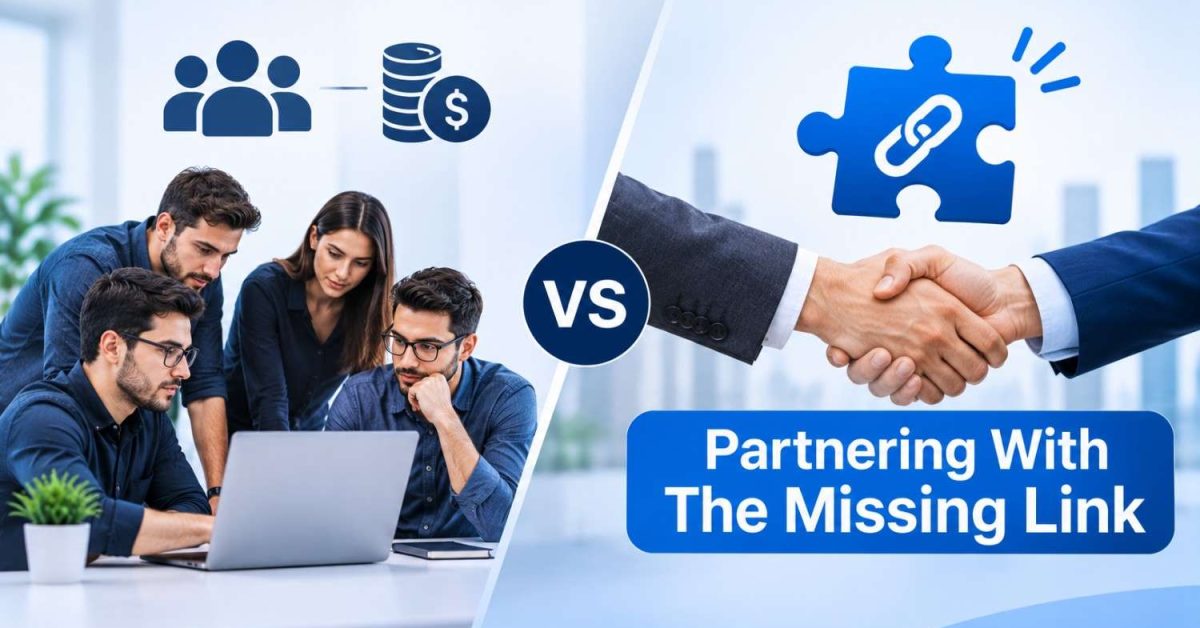
Hiring a senior systems engineer in Melbourne looks straightforward on a job board. You budget $135,000 for base salary, sign off on the requisition and expect your cloud, security and support headaches to disappear.
Then the actual invoices arrive.
Between 12% superannuation, Victorian payroll tax, recruitment fees, vendor certifications and enterprise monitoring tools, that single hire can easily pass $185,000 in year one. Worse, one engineer can’t cover 24/7 operations, take four weeks of annual leave and master Microsoft Azure architecture, network routing and ASD Essential Eight compliance all at once.
For Australian mid-market and enterprise organisations, comparing a base salary with a managed services retainer misses the real financial picture.
Key takeaways:
- The true cost of an in-house IT hire runs well above base salary once on-costs, recruitment, training, tools and after-hours cover are added.
- One or two engineers can’t provide 24/7 coverage or deep expertise across cloud, networking and security.
- A co-managed model keeps strategic control in-house while a managed partner handles round-the-clock operations.
Where Does the IT Budget Actually Go?
Most of the cost of in-house IT sits outside base pay. When finance leaders model internal IT headcount, they often undercount five operational expenses.
1. Recruitment and Onboarding Lag
Specialist technical recruiters in Melbourne typically charge 15% to 25% of first-year salary. Add six weeks of interviewing, a four-week notice period and three months before the new engineer understands your environment, and you lose nearly half a year of productive output.
2. Statutory On-Costs and Leave Gaps
Adding 12% super, WorkCover and payroll tax pushes employment costs up by roughly 18% to 22%. With four weeks of annual leave and ten days of personal leave, a full-time engineer is actually at work about 46 weeks out of 52.
3. Continuous Technical Upskilling
Cloud platforms, firewall firmware and endpoint detection tools change every quarter. Keeping one engineer certified across AWS, Microsoft 365 and modern security frameworks can cost $5,000 to $10,000 a year in exam fees, labs and lost working hours.
4. Single-Tenant Software Licensing
Buying enterprise RMM (remote monitoring and management), backup orchestration, vulnerability scanning and SIEM licences for a single company comes at steep per-seat retail pricing.
5. After-Hours Call-Out Costs
Hardware fails at 2:00 AM on a Sunday. Running an internal on-call roster requires shift penalties, fatigue management and at least three engineers to avoid burnout.
The lesson is simple: comparing in-house IT with managed services on salary alone is one of the most common budgeting mistakes. Salary is the visible tip, while tooling, coverage gaps and turnover risk carry the real weight.
What Is the Generalist Trap and Key-Person Risk?
Even if you absorb the overhead, a small internal team hits a structural ceiling. Modern enterprise infrastructure demands distinct disciplines that rarely live in one person’s head.
A strong network engineer who knows BGP routing and SD-WAN inside out is seldom the same person who wants to spend Friday afternoon auditing Conditional Access policies, tuning CrowdStrike rules or building Power Automate workflows. When one generalist has to cover every layer of the stack, two things happen:
- Strategic projects stall behind Level 1 password resets.
- Your security posture slowly drifts.
The Cost of a Single Point of Failure
Concentration risk hurts even more. When your only senior engineer resigns, or takes three weeks off over December, undocumented firewall rules, vendor relationships and legacy workarounds walk out the door with them.
Replacing that knowledge in the middle of an incident is an expensive way to learn about single points of failure.
How Does a Managed IT Model Change the Economics?
A managed model pools specialist engineers across many client environments, so you get access to several skill sets without paying several full-time salaries.
Engaging The Missing Link’s Melbourne IT team gives Victorian organisations immediate access to Level 1, 2 and 3 support engineers, cloud architects, network specialists and a 24/7 Security Operations Centre under a predictable monthly agreement.
Backed by more than 28 years of Australian delivery experience and Infosys’s global scale, their local engineers work alongside your internal leadership rather than leaving ticket queues unmonitored overnight.
In-House vs Managed IT: 12-Month Comparison
Here’s how the numbers and day-to-day realities compare for a typical 100-seat Melbourne business:
| Factor | In-House Team (2 FTEs: 1 Senior + 1 Support) | Multi-Disciplinary Managed IT Partner |
|---|---|---|
| Annual direct cost | $265,000 to $310,000 AUD (salaries, 12% super, tax) | Predictable fixed monthly retainer |
| Recruitment and turnover | $35,000+ per replacement cycle | $0, as the provider absorbs staffing changes |
| Coverage window | 8:30 AM to 5:30 PM, Mon to Fri (46 weeks a year per person) | 24/7/365 monitoring, escalation and service desk |
| Enterprise tooling | $30,000 to $65,000 a year at single-org retail rates | Enterprise RMM, patching and monitoring included |
| Specialist breadth | Limited to two people’s certifications | Cloud, networking, cyber, backup and DaaS specialists |
| Documentation | Often informal or kept in personal notes | Standardised runbooks, CMDB and SLA reporting |
Figures are indicative estimates for planning purposes.
What Are the Signs Your In-House IT Model Costs Too Much?
Not every business should outsource everything. If you run custom industrial software on a factory floor that needs a technician beside the machine all day, keep dedicated staff on site.
However, moving to a managed or co-managed model pays off quickly when you notice these warning signs:
- Your senior engineer spends 60% of the week on routine tickets. Paying $150,000 a year for someone to set up laptops and fix Teams audio wastes both money and talent. Offloading day-to-day support frees internal leads for business-aligned technology projects.
- Patching and vulnerability fixes fall behind. Under the Australian Signals Directorate’s Essential Eight framework, critical patches should be applied within 48 hours when a working exploit exists. Without automated tooling and dedicated weekend maintenance windows, small internal teams struggle to keep up.
- Cyber insurance renewals bring painful questionnaires. Insurers now ask for proof of 24/7 threat monitoring, immutable backups and tested disaster recovery runbooks. Building those controls internally can require several new hires.
- Growth happens in bursts. Opening a new office, migrating to hybrid cloud or onboarding 40 staff after an acquisition can overwhelm a fixed internal team and force expensive emergency contractor spend.
How Do You Get the Co-Managed Balance Right?
The strongest IT setups in Melbourne rarely treat internal staff and managed providers as an all-or-nothing choice. Many organisations keep an internal IT Manager or Business Analyst who knows the company’s workflows well, while relying on a local managed partner for 24/7 infrastructure management, network engineering, backup resilience and security operations.
You keep strategic ownership without carrying the operational drag. When a major cloud migration or office move lands on the roadmap, you can bring in senior project architects immediately, then scale back to steady-state support once the cutover is complete. A stable network infrastructure built and monitored this way also makes later automation projects far easier.
Conclusion
Audit your last 12 months of IT spending beyond payroll. Once you add recruitment fees, downtime risk from unpatched systems, retail software licences and after-hours coverage gaps, the picture often changes.
For many organisations, partnering with a multi-disciplinary Melbourne engineering team delivers stronger resilience for less money than hiring another generalist.
Frequently Asked Questions
How much does an in-house IT engineer really cost in Melbourne?
A senior systems engineer on a $135,000 base salary can cost $185,000 or more in year one once superannuation, payroll tax, WorkCover, recruitment fees, training and tools are included.
Is managed IT cheaper than an in-house IT team?
Often, yes, for small and mid-sized organisations. A managed provider spreads the cost of 24/7 coverage, specialist engineers and enterprise tools across many clients, which a one- or two-person internal team can’t match.
What is co-managed IT?
Co-managed IT is a hybrid model where an internal IT lead keeps strategic control and business knowledge, while an external provider handles day-to-day support, monitoring, security operations and specialist projects.
