
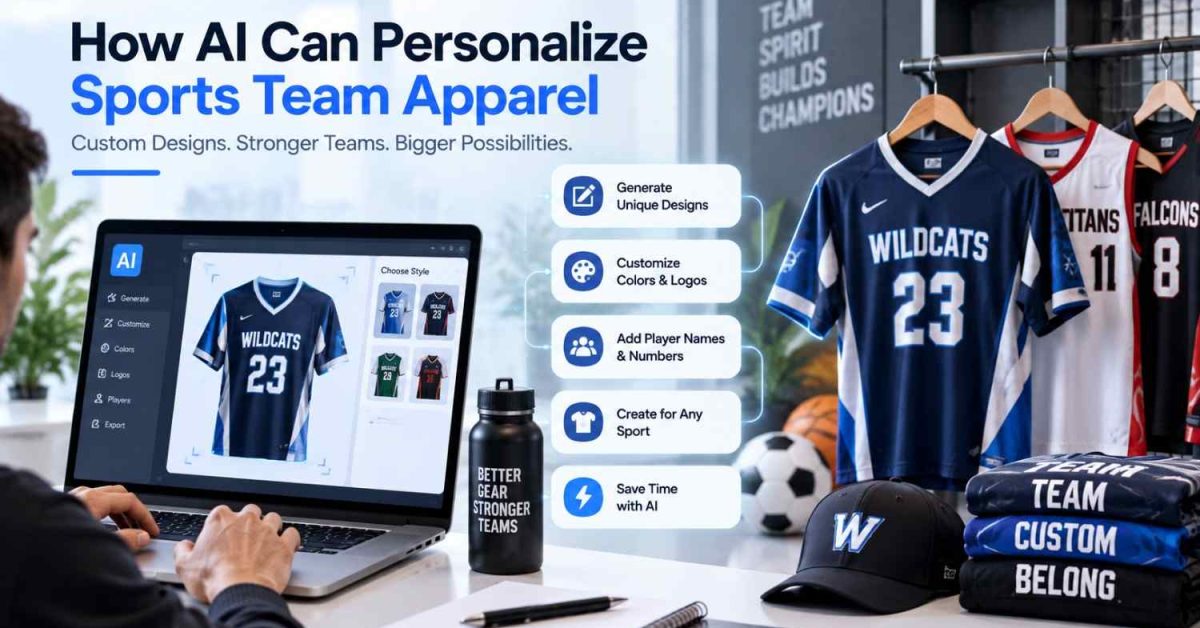
Sports team apparel is no longer limited to choosing a template, adding a logo, and ordering in bulk. AI is changing how teams approach design, personalization, and production. It can process design inputs, generate variations, automate repetitive tasks, and help teams visualize finished apparel before placing an order.
For clubs, schools, amateur teams, and competitive sports organizations, this creates a more efficient way to develop apparel that reflects a specific identity.
AI Makes Apparel Design More Flexible
Traditional sports apparel design can involve several rounds of communication. A team provides its colors, logo, preferred style, player details, and other requirements. A designer then creates a concept and makes revisions.
AI can reduce this process by generating multiple design variations from structured inputs. A team could specify its primary colors, sport, preferred patterns, logo placement, and overall visual style. The system can then produce several concepts for review.
This does not remove the need for human design expertise. Instead, it moves more of the repetitive ideation work into software.
Modern AI jersey tools already demonstrate this approach. Some systems can generate apparel concepts, apply colors and logos, and produce visual mockups within minutes.
Personalization Goes Beyond Team Colors
AI can also help create individual variations while maintaining a consistent team design.
For example, a team may need different names, numbers, sizes, sponsor placements, and player-specific details. These attributes can be stored as structured data rather than manually entered for every garment.
A personalization workflow can include:
- Team colors and visual identity
- Player names and numbers
- Logos and sponsor marks
- Individual sizes and garment specifications
- Different design elements for positions or player groups
This is particularly useful when ordering apparel for an entire squad. Automated data handling reduces repetitive design work and can help minimize transcription errors.
For sports such as padel, teams can also explore custom padel jerseys that combine team identity with player-specific details.
AI Can Improve the Design Decision Process
One of the practical benefits of AI is rapid iteration. A team does not have to settle on its first concept.
A system can generate alternatives based on controlled parameters. Designers can adjust color ratios, pattern density, typography, sleeve treatments, and branding positions. The resulting designs can then be compared before production.
This creates a more structured design process.
Instead of asking, “What should our jersey look like?” teams can test specific combinations. They can evaluate whether a pattern works with the logo, whether numbers remain readable, and whether sponsor branding has enough visual separation.
AI-generated concepts can also help non-designers communicate ideas more clearly. A coach or team manager may have a general concept but lack the technical skills to create a professional mockup. AI can turn descriptive inputs into visual references that a designer can refine.
Personalization Can Use Real Customer Data
AI becomes more useful when connected to structured customer or roster data.
For example, an apparel platform could connect a team’s roster to a design system. Player names, numbers, sizes, and other approved details could then populate a standardized template.
This approach has two important advantages. First, it reduces manual entry. Second, it creates consistency across the order.
The technology can also support rules. A system might restrict number formats, preserve brand colors, or prevent logos from being placed outside defined print areas.
That combination of generative AI and rule-based automation is important. Creative freedom needs technical boundaries when a design is moving toward physical production.
AI Should Support Production, Not Just Design
A digital mockup is only useful if the final garment can be produced accurately.
Production requirements can include fabric characteristics, print resolution, color profiles, artwork dimensions, safe zones, and placement specifications. AI can assist with checking some of these requirements, but production systems still need defined technical standards.
This is where human oversight remains important. AI may create an attractive visual that does not translate perfectly to fabric. A designer or production specialist can identify issues before manufacturing.
The strongest workflow therefore combines automation with quality control.
Personalization Reflects Changing Fan Expectations
Personalization is also becoming more important across the broader sports experience. An IBM survey of more than 20,000 sports fans across 12 countries found that 85% saw value in integrating AI into their sports experience.
The finding does not specifically measure sports apparel. However, it illustrates the wider demand for more personalized digital interactions within sports.
Apparel can become part of that experience. A team can use AI to develop designs that reflect its identity, create player-specific versions, and explore new visual concepts without rebuilding every design from scratch.
The Future of AI-Personalized Team Apparel
AI is likely to become another layer in the sports apparel workflow rather than a replacement for designers. Its strongest applications involve repetitive processes, rapid concept generation, personalization, and data handling.
Teams can use these capabilities to explore more ideas while maintaining consistent branding and production requirements.
The result is a more connected process from concept to finished apparel. AI handles much of the repetitive work. Human designers and production teams provide the judgment needed to turn those concepts into practical sportswear.
