
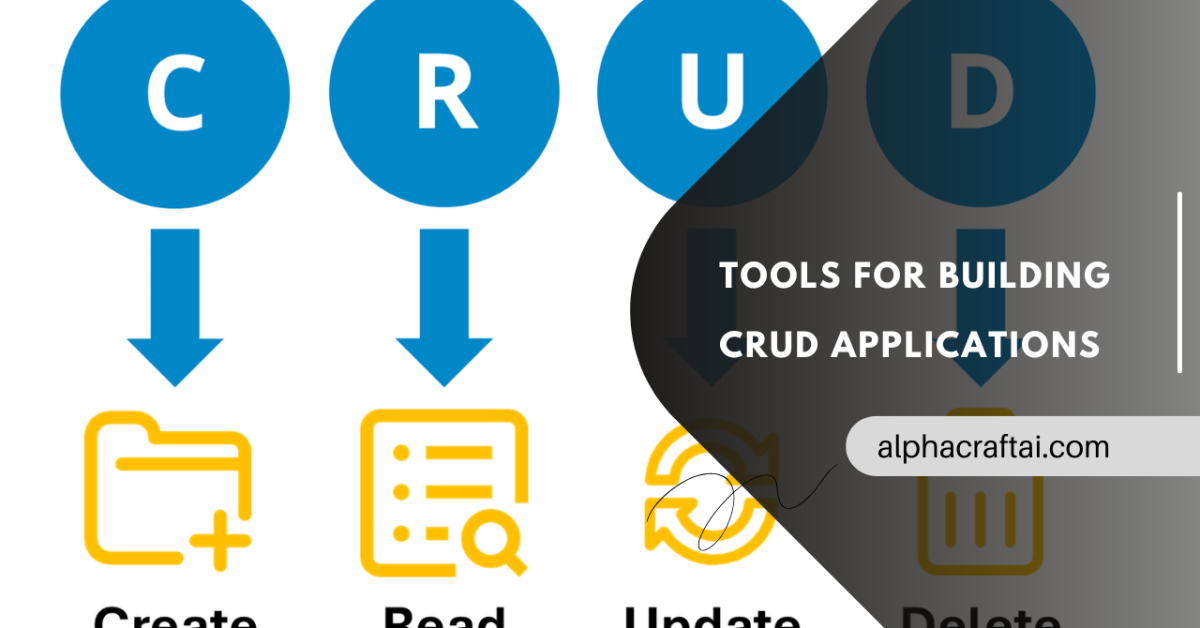
By 2026, CRUD applications are no longer “basic software.” They are the operational backbone of modern businesses powering dashboards, internal tools, SaaS platforms, admin panels, and data-driven products. While the core idea behind CRUD hasn’t changed, the way developers build CRUD software has evolved dramatically.
This article explains what CRUD applications are, what CRUD means in software and programming, and most importantly, the best tools for building CRUD applications in 2026. The goal is clarity, not hype. Whether you’re a developer, product manager, or technical decision-maker, this guide is written to match real-world intent.
What Are CRUD Applications?
CRUD applications are software systems built around four fundamental operations:
- Create – Add new data
- Read – Retrieve existing data
- Update – Modify stored data
- Delete – Remove data
If an application allows users to add records, view them, edit them, and remove them, it qualifies as a CRUD application.
Examples are everywhere:
- User management systems
- Inventory dashboards
- Content management systems
- CRM tools
- Internal admin panels
In practice, application CRUD is less about simplicity and more about reliability, performance, and data integrity at scale.
What Is CRUD in Software?
In software architecture, CRUD represents the core interaction model between applications and data storage systems.
When developers ask “what is CRUD in software?”, they are usually referring to how applications communicate with databases through:
- SQL queries
- ORM layers
- APIs
- Data access services
CRUD software sits between the user interface and the database, ensuring data flows securely, predictably, and consistently. In modern systems, CRUD is rarely “just database logic.” It includes validation, permissions, audit logs, concurrency control, and API exposure.
What Is CRUD in Programming?
From a programming perspective, CRUD defines how code structures data operations.
When developers talk about what is CRUD in programming, they typically mean:
- Writing functions or methods for each operation
- Mapping HTTP methods to data actions (POST, GET, PUT, DELETE)
- Structuring repositories, services, or controllers
In 2026, CRUD programming emphasizes:
- Clean architecture
- Reusable data layers
- API-first design
- Automated validation and schema enforcement
CRUD code is no longer repetitive boilerplate—it’s often generated, abstracted, or managed by specialized tools.
What Is a CRUD Application in 2026?
A CRUD application in 2026 is defined less by what it does and more by how efficiently it’s built and maintained.
Modern CRUD applications typically include:
- Role-based access control
- Real-time updates
- API integrations
- Cloud-native deployment
- Automated migrations and backups
What separates strong CRUD software from weak implementations is tools that reduce manual work without sacrificing control.
Why Tools for Building CRUD Applications Matter in 2026
Building CRUD applications from scratch used to be a rite of passage. Today, it’s often a productivity risk.
The right tools for building CRUD applications in 2026 help teams:
- Ship faster without fragile code
- Reduce repetitive boilerplate
- Enforce consistent data models
- Improve long-term maintainability
- Scale without rewrites
Speed alone isn’t the goal. Predictability and adaptability are.
Backend Tools for CRUD Applications
Modern Web Frameworks
Backend frameworks remain the foundation of CRUD software. In 2026, the most effective ones offer:
- Built-in routing and controllers
- Integrated ORM or query builders
- Native validation and middleware
Popular frameworks continue to dominate because they standardize CRUD logic without locking teams into rigid patterns.
ORMs and Data Modeling Tools
Object-Relational Mappers remain essential for CRUD programming. They allow developers to define data models once and generate:
- Create logic
- Read queries
- Update operations
- Delete constraints
Modern ORMs now emphasize:
- Type safety
- Schema migrations
- Performance tuning
- Database-agnostic design
Frontend Tools for CRUD Applications
Component-Based UI Frameworks
Frontend CRUD interfaces rely heavily on reusable components:
- Data tables
- Forms
- Filters
- Modals
In 2026, frontend frameworks focus on:
- State synchronization
- Optimistic updates
- Accessibility
- Performance under large datasets
A well-built frontend CRUD layer reduces user errors and improves data quality.
Low-Code and Admin UI Generators
One of the biggest shifts in CRUD application development is the rise of low-code tools. These platforms generate fully functional CRUD interfaces directly from schemas or APIs.
They are commonly used for:
- Internal dashboards
- Admin panels
- Back-office tools
While not ideal for consumer-facing products, they dramatically reduce development time for internal CRUD software.
Common Use Cases for CRUD Applications
CRUD applications continue to dominate these scenarios:
- SaaS dashboards
- Internal operations tools
- HR and payroll systems
- Content platforms
- Analytics and reporting tools
In each case, the core CRUD logic is similar but tooling choices determine how quickly teams adapt to change.
Conclusion
CRUD applications remain fundamental, but they are no longer trivial. Understanding what CRUD is in software, what CRUD means in programming, and how modern CRUD applications are built is essential for any technical team in 2026.
The right tools for building CRUD applications allow teams to focus on business logic, user experience, and scalability instead of repetitive data plumbing. As software systems continue to grow more complex, well-structured CRUD software remains the quiet engine behind reliable digital products.