
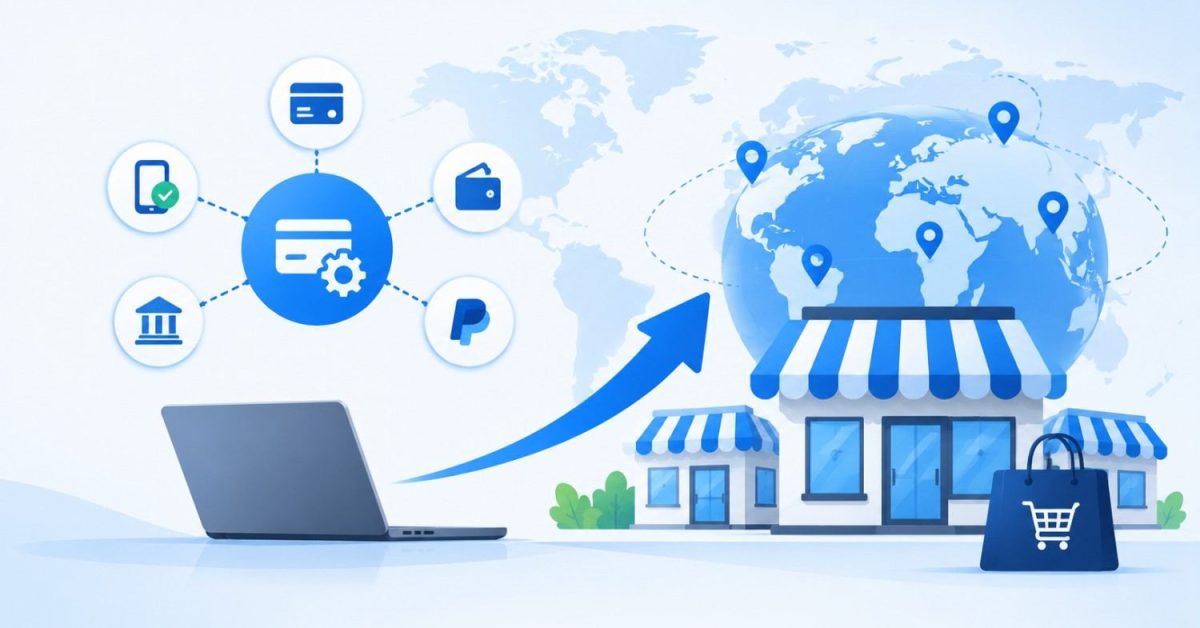
Global expansion rarely breaks down because of the product. It breaks down on the payment page. According to NPCI data, India’s UPI processed 24.51 billion transactions worth Rs 29.82 lakh crore in August 2026, then its highest monthly volume. A brand that enters India with a card-only checkout is ignoring how much of the country actually pays.
Payment orchestration providers exist to close that gap. They connect a business to many regional processors, acquirers, and local payment methods through one API. Launching in a new country then becomes mostly a configuration task instead of a months-long engineering project.
What Are Payment Orchestration Providers?
Payment orchestration providers are companies that run a software layer between a merchant and several payment service providers (PSPs). They don’t replace processors. They manage them by deciding where each transaction goes, retrying failures, and collecting the results in a single dashboard.
The main difference from working with one PSP is choice. A merchant tied to a single processor inherits its strengths in some regions and its weaknesses in others. An orchestration layer lets each market run on whichever connection performs best there.
Key term: Payment orchestration platforms are the software products these companies sell. They typically combine routing, tokenization, failover, and reporting behind one integration.
How Does Orchestration Speed Up Market Entry?
Most of the time saved comes from three areas: local payment methods, currency handling, and regulatory support. Each one removes work that would otherwise sit with an in-house engineering or finance team.
Local Payment Methods Without Custom Builds
Most payment orchestration providers already maintain connections to region-specific methods, so a merchant can switch them on instead of building them. Common examples include:
- Pix in Brazil: the instant payment system launched by the Central Bank of Brazil in November 2020
- UPI in India: operated by the National Payments Corporation of India
- Wero in Europe: developed by the European Payments Initiative (EPI)
- iDEAL in the Netherlands: now migrating to Wero
Europe shows why ongoing maintenance matters as much as the first integration. Wero has been live for P2P payments in Belgium, France, and Germany since 2024 and serves 53 million users. It has been live for retail payments in Germany since the end of 2025, with a progressive rollout in France and Belgium throughout 2026 (source: EPI). A merchant integrating Wero directly would have to follow every country launch. An orchestration partner handles those updates centrally.
Multi-Currency Processing and Settlement
Orchestration layers usually support local-currency pricing and pull settlement data from every connected processor into one report. This doesn’t remove foreign-exchange costs. It makes them visible, so finance teams can compare settling locally against converting centrally, market by market.
Regional Compliance Support
Strong customer authentication under Europe’s PSD2, PCI DSS rules for card data, and local data residency laws all shape how a checkout must work. Many payment orchestration providers include pre-built frameworks for these requirements, including secure token storage that reduces how much raw card data a merchant handles.
Note: Outsourcing the infrastructure does not transfer legal responsibility. The merchant remains accountable in every jurisdiction where it sells.
How Do Payment Orchestration Platforms Raise Approval Rates?
They raise approval rates by giving each transaction more than one possible path. Cross-border card payments are declined more often than domestic ones, because issuing banks tend to treat foreign-acquired transactions with extra caution. Better routing directly addresses this.
Intelligent Routing to Local Acquirers
Sending a payment through an acquirer in the shopper’s own country often improves approval odds and can reduce cross-border fees. Routing engines decide in real time based on factors such as card origin, amount, currency, each processor’s recent performance, and cost per route.
Automatic Failover
When a processor goes down or returns a soft decline, the transaction can be retried through a backup route before the shopper sees an error message. Merchants that depend on a single PSP have no such fallback.
Pro tip: Configure retries for soft declines only, such as insufficient funds or issuer timeouts. Retrying hard declines, such as stolen cards, wastes attempts and can breach card network retry rules.
Processor-Agnostic Tokenization
Independent token vaults let one stored card work across several regional processors. Payment orchestration providers that offer processor-agnostic tokens remove a quiet form of lock-in. Without them, switching or adding a PSP can force returning customers to re-enter their card details.
Direct Integrations vs. Orchestration: Side by Side
Neither model is right for every business. The comparison below shows where the practical differences lie.
| Factor | Direct PSP integrations | Orchestration layer |
|---|---|---|
| Adding a new market | New build per provider | Usually configuration |
| Local payment methods | Integrated one by one | Often pre-connected |
| Outage handling | Depends on one PSP | Rerouting to backups |
| Card token portability | Tied to each PSP | Possible via independent vault |
| Reporting | Separate dashboards | Unified analytics |
| Cost structure | PSP fees only | PSP fees plus platform fee |
Do I Need a Payment Orchestration Platform?
Not always. A company selling in one country, through one processor, with cards covering nearly all of its customers, would mostly be adding cost and complexity.
The case for payment orchestration providers becomes stronger when several of these signals appear together:
- Sales in three or more countries, or concrete plans to get there within a year
- Customer requests for local payment methods the current setup can’t offer
- Authorization rates noticeably lower in specific regions
- Growing engineering time spent maintaining payment connections
- Heavy dependence on a single PSP’s uptime, pricing, or terms
There are trade-offs on the other side. Orchestration adds a vendor, a contract, and usually a fee, charged per transaction or as a subscription. Some large PSPs also offer multi-acquirer features that may cover simpler needs.
How to Compare Payment Orchestration Providers
Feature lists are long, so the useful comparison is about evidence. Before signing, ask each vendor:
- Which local methods are live today, and which are only on the roadmap?
- Can stored card tokens be exported if the contract ends?
- How does pricing change as transaction volume grows?
- How quickly is support added when a scheme like Wero enters a new country?
- What authorization rate data can be shared for the specific target markets?
Timing matters, too. Adding orchestration before the third or fourth market launch is usually far simpler than untangling several direct integrations later.
Frequently Asked Questions
What do payment orchestration providers actually do?
They route each transaction across multiple PSPs, acquirers, and payment methods through one integration. They also handle retries, tokenization, and consolidated reporting. The goal is higher approval rates and faster market launches without a separate build for every region.
Are payment orchestration platforms the same as payment gateways?
No. A gateway connects a merchant to one processor or network. An orchestration platform sits above several gateways and processors and decides which one to use for each payment. Many merchants use both together.
Can orchestration reduce payment processing costs?
It can, though savings aren’t guaranteed. Routing to local acquirers and cheaper routes may lower fees, but the platform charges its own fee as well. The net result depends on transaction volume, market mix, and how well routing rules are tuned.
How long does it take to launch a new market with orchestration?
It depends on the provider and the payment methods involved. If the needed local methods and acquirers are already connected, a launch can be mainly a configuration change instead of a new engineering project. Contracts with local acquirers and compliance checks can still add time.
Do small businesses benefit from payment orchestration?
Usually only once they sell across borders. A small company operating in one country with one processor rarely gains enough to justify the added fee. Once international expansion is on the roadmap, earlier adoption tends to cost less than a later migration.
