
The growing integration of artificial intelligence into daily business practices has changed the way people work. Employees who used to spend much of their time on repetitive actions, organizing information, preparing reports, or coordinating processes can now rely on intelligent technologies for help.
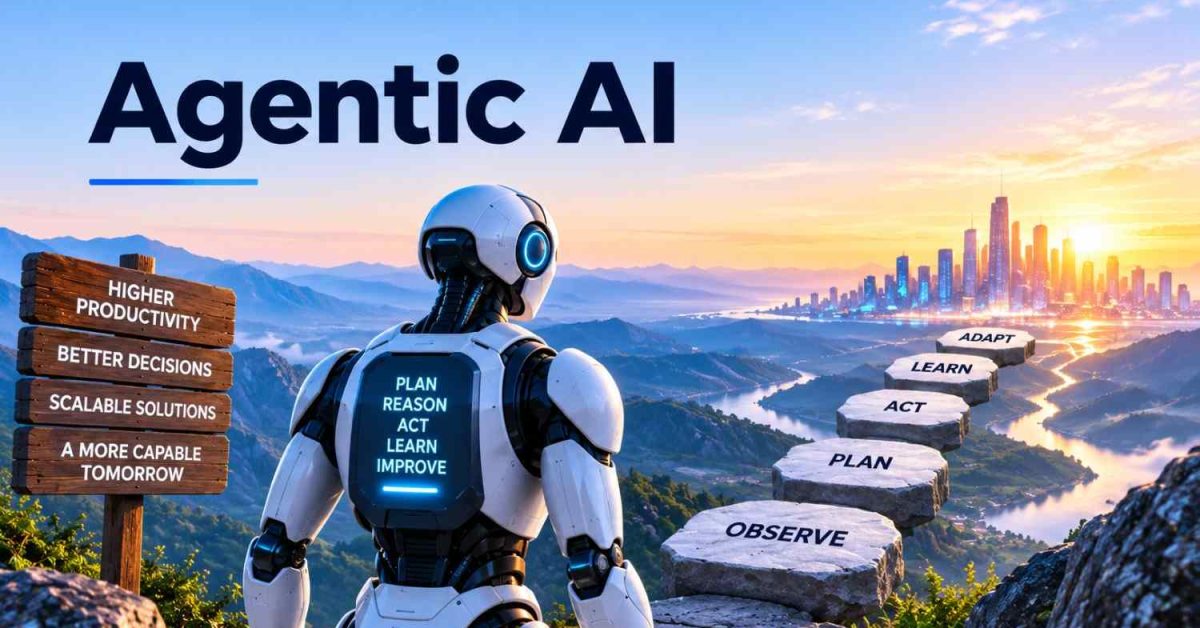
The development of agentic AI takes this trend to a new level. Instead of responding to separate requests, it works toward specific goals, coordinating tasks, making contextual decisions, and completing processes.
This affects more than how quickly work gets done. It also changes what employees focus on. As routine tasks become easier to automate, professionals can devote more effort to judgment, problem-solving, creativity, collaboration, and strategic planning. Understanding this transition has also led many professionals to seek out an agentic AI course.
Moving Beyond Traditional Task Automation
Traditional workplace automation works well when a process follows a fixed set of rules. A worker carries out an assignment while the system executes its programmed commands.
Agentic artificial intelligence offers more flexibility. Rather than only following predefined instructions, an agent-based AI system can pursue a goal and organize the activities needed to reach it. This goal-driven design is at the heart of most modern agentic frameworks.
The shift can affect employee responsibilities in several ways:
- Routine administrative activities can require less manual involvement.
- Information can be gathered and organized more efficiently.
- Employees can spend less time moving information between business systems.
- Standard workflow activities can be coordinated through intelligent systems.
- Professionals can dedicate more attention to decisions that require human judgment.
Rather than removing employees from business processes, this approach can reposition them toward responsibilities where experience, context, and strategic thinking matter.
Employee Roles Are Becoming More Strategic
One of the most important changes associated with agentic AI is the move from task execution toward strategic contribution.
Employees spend much of their workday preparing information before it can actually be used. Reports have to be sorted, documents reviewed, communication managed, and updates collected. Intelligent agents make these tasks easier, freeing up more of employees’ time to analyze information and make decisions.
This can place greater emphasis on skills such as:
- Critical thinking
- Strategic planning
- Creative problem-solving
- Communication
- Collaboration
- Decision-making
- Leadership
- Business understanding
An employee’s value therefore becomes increasingly connected to how effectively they apply knowledge, rather than how quickly they complete repetitive processes.
From Doing the Work to Guiding the Work
Agentic AI can also transform how people relate to technology. Traditional software only helps when an employee operates it step by step. Agentic systems can act more like a capable co-worker that carries tasks forward on its own.
In the future, people will increasingly set targets, provide context, assess results, and step in when human judgment is needed.
This moves the employee toward a decision-making and supervisory role. Human oversight remains necessary because business situations can involve ambiguity, sensitive information, ethical issues, customer needs, and shifting corporate priorities.
Employees therefore need to understand not only how to use AI, but also when its outputs should be reviewed, questioned, or adjusted.
Creating More Space for Human Skills
When people talk about automation, they often think only about efficiency, but the effect on employees can be much broader. When mundane activities take up less mental space, uniquely human abilities become more important.
Relationship building is one area where this matters. Customers and colleagues often expect understanding, trust, negotiation, and careful communication, elements that cannot be fully captured by an automated workflow.
Creative thinking is equally important. AI can help arrange information and generate alternatives, while employees apply their knowledge of the company and their common sense to choose the right course of action.
Strategic thinking follows the same pattern. While AI can help analyze data, employees will still play an important role in connecting that data to company priorities and deciding which goals deserve attention.
New Skills for an Agentic AI Workplace
Workers may need to get used to sharing their working lives with intelligent AI systems. Technical skills can be an advantage, but understanding how AI fits into business workflows may be just as important.
Professionals may benefit from learning how to:
- Define clear goals for AI systems
- Understand AI-assisted workflows
- Review AI-generated outputs critically
- Identify tasks that are suitable for automation
- Maintain appropriate human oversight
- Connect AI capabilities with business objectives
- Recognize potential risks and responsible AI considerations
This is where structured learning, such as generative AI courses, becomes valuable for understanding the wider scope of what today’s AI can do. An agentic AI course can help participants learn more about AI agents, autonomous workflows, goal-based AI systems, and human-AI interaction. For employers, funding this kind of training is one of the most practical ways of building AI talent in-house.
Changing How Teams Work Together
Agentic AI may shape individual work, but it can also shape teamwork. With automation handling routine coordination and information processing, team discussions can focus on priorities, issues, decisions, and results.
Managers may also spend less time collecting routine updates and more time on coaching, planning, collaboration, and resolving complex issues.
This leads to a way of working where employees are not judged solely on how quickly they complete monotonous tasks. Their ability to read signals, collaborate, make decisions, and think strategically may be valued more highly.
Preparing for the Shift
You don’t need to be an AI expert to embrace agentic AI. For most professionals, the focus is on practical application: how AI can support the work they already do.
Employees can start by building their own AI literacy, understanding how automation fits into their work and how to strengthen the skills that automation cannot replace.
The aim is not simply to do things faster with AI. It is to do things differently, offloading suitable repetitive work to technology so people can focus on what they do best: work that calls for context, creativity, relationships, and judgment.
Conclusion
The role of employees in the workplace is changing as agentic AI moves automation beyond basic task execution toward fully connected workflows. As intelligent agents take on repetitive work, employees can focus on higher-value activities.
The future of work is not only about what AI can take off our plates, but also about how people can use their expanded capabilities alongside intelligent agents. Employees who build this knowledge through a generative AI course or agentic AI training will be well positioned to combine the strengths of intelligent agents with human judgment.
