
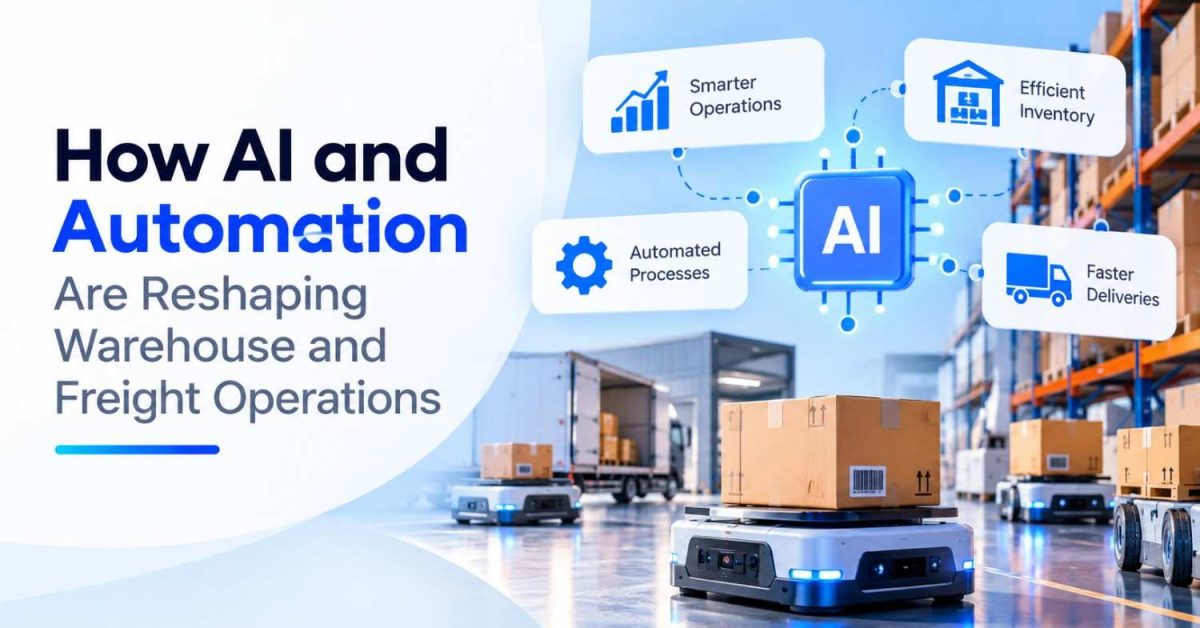
At 6:40 in the morning, a warehouse supervisor’s phone buzzes. A cold storage zone has climbed two degrees in the last hour, a trailer due at dock four is running ninety minutes behind, and pick rates in one aisle have dropped well below normal. No one found these issues by reading a report. They surfaced automatically, often through smart warehouse management software that compares what is happening with what should be happening and flags the difference.
Much of this isn’t full-blown artificial intelligence. It sits in an “AI-adjacent” space of rules, statistical models, and pattern recognition, and it is changing how operations teams spend their time.
The Quiet Shift From Reports to Signals
For decades, logistics teams worked from reports. Someone pulled yesterday’s data, reviewed it, and decided what to fix. The problem is that by the time a report showed an issue, the damage was usually done: a shipment had already missed its window or stock had already run out.
Automation flips that model. Instead of people searching data for problems, systems monitor data continuously and push problems to people. The job changes from finding exceptions to resolving them.
The most valuable operations data interrupts you at the right moment.
Alerts: Rules Come Before Intelligence
The simplest and most widely used form of automation is the rules-based alert. A threshold is set, and the system notifies someone when it’s crossed. Stock falls below a reorder point. A shipment hasn’t been scanned in 24 hours. A dock appointment is missed.
These alerts aren’t sophisticated, but they’re reliable and easy to understand. They also form the foundation for more advanced tools. Teams that haven’t defined clear thresholds and responses usually struggle to get value from anything more complex.
Exception Detection: Finding What Doesn’t Fit
Exception detection goes a step further. Rather than relying on fixed rules, it looks for activity that falls outside normal patterns. A picker scanning items unusually slowly, a bin count that doesn’t match recent movement, or a truck taking an unexpected route can all be flagged without anyone writing a specific rule.
In warehouses, this helps catch inventory drift, mislocated stock, and process bottlenecks early. In freight, it highlights shipments at risk of delay, carriers underperforming on certain lanes, and billing discrepancies between quoted and invoiced rates. The strength of exception detection is its ability to spot problems nobody expected.
Predictive Patterns: Looking Ahead Instead of Back
Predictive tools use historical data to estimate what’s likely to happen next. In warehouse settings, that includes forecasting order volume to plan staffing, anticipating which products will need replenishment, and identifying slow-moving stock before it ties up space.
On the freight side, predictive models estimate arrival times based on traffic, weather, and carrier history, rather than relying on a static schedule. They can also highlight lanes or seasons where delays are likely, helping planners book capacity earlier or adjust routing.
These predictions aren’t perfect, and they don’t need to be. Even a reasonably accurate forecast gives teams more time to react than a report that arrives after the fact.
How These Capabilities Compare
Each type of automation serves a different purpose, and most mature operations use all three together.
| Capability | Warehouse Example | Freight Example | What It Replaces |
| Rules-based alerts | Low stock or temperature threshold breached | Missed pickup or delivery milestone | Manual checks and daily reports |
| Exception detection | Inventory counts drifting from expected movement | Route deviation or unusual dwell time | Spot audits and customer complaints |
| Predictive patterns | Forecasting labor needs by day and shift | Dynamic arrival time estimates | Fixed schedules and gut instinct |
Data Quality Decides Everything
Automation is only as good as the data behind it. A system can’t flag an inventory mismatch if items weren’t scanned at receiving. It can’t predict delays accurately if shipment milestones are logged inconsistently.
That’s why the most successful deployments start with basics: consistent scanning, clean product and location data, reliable carrier integrations, and standardized event tracking. Teams that skip this step often end up with alerts that fire at the wrong times, or predictions nobody trusts.
Automation doesn’t fix messy data. It amplifies it.
Keeping Humans in the Loop
One common risk is alert fatigue. When systems generate too many notifications, people start ignoring them, and the important signals get lost in the noise. Good automation is selective. It prioritizes the exceptions that matter, groups related alerts, and routes each one to the person best placed to act.
Human judgment remains essential. A system might flag a late trailer, but a planner decides whether to reschedule labor, contact the customer, or expedite another shipment. Automation handles the watching, while people handle the deciding.
Where to Start
Operations teams don’t need to overhaul everything at once. A practical approach is to identify the three or four problems that cause the most disruption, such as stockouts, missed deliveries, or inventory inaccuracies, and set up clear alerts for those first. This incremental approach also works well for broader AI automation workflows, where businesses automate well-defined processes first before introducing more advanced decision support.
Once those alerts are reliable, teams can layer in exception detection and predictive tools where they add the most value. Regularly review alert performance, including which ones led to action and which were ignored, to keep the system useful as operations grow.
Bringing It All Together
Automation in warehouse and freight operations is less about replacing people and more about changing where their attention goes. Rules-based alerts catch known problems quickly. Exception detection surfaces issues nobody anticipated. Predictive patterns give teams time to prepare instead of react.
Together, they shift operations from reviewing what went wrong to preventing it. The organizations seeing the most benefit invest in clean data, keep alerts focused, and treat automation as a partner to human judgment rather than a substitute.
