
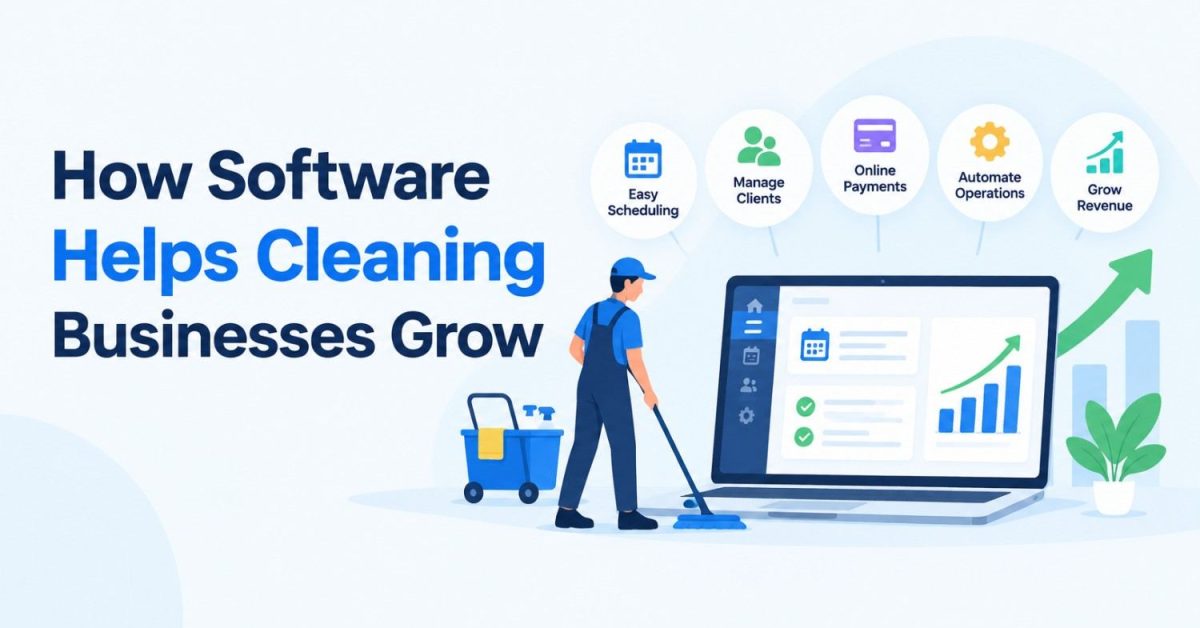
Running a cleaning business involves much more than delivering spotless homes and offices. Behind every completed appointment are schedules to organize, employees to coordinate, customer requests to manage, and invoices to send. As a business grows, handling these responsibilities through spreadsheets, phone calls, and handwritten notes can become increasingly difficult.
This is where cleaning company software can make a meaningful difference. By bringing everyday operations into one organized system, business owners can reduce administrative work, improve communication, and spend more time focusing on customer satisfaction and business growth.
When Spreadsheets and Sticky Notes Stop Working
Many cleaning businesses begin with simple administrative systems. A shared calendar tracks appointments, a spreadsheet holds customer information, and text messages help employees stay informed.
These methods can work reasonably well when a company serves only a handful of customers. Problems tend to appear as bookings increase and more employees join the team. An appointment gets entered incorrectly, a customer changes their preferred cleaning time, or an employee misses an important instruction buried in a long message thread. Small mistakes quickly become frustrating when they affect several people.
A centralized management platform helps organize schedules, customer details, and service information in one place. Instead of searching through multiple documents, staff members can access the information relevant to their responsibilities. The result is a more consistent workflow with fewer opportunities for miscommunication.
Scheduling Shouldn’t Feel Like Solving a Puzzle
Coordinating cleaning appointments can become complicated when customers have different preferences, properties require varying amounts of time, and employees work different shifts.
A scheduling system allows business owners to view upcoming appointments, employee availability, and recurring bookings without constantly updating separate calendars. This becomes especially valuable when customers request last-minute changes. Rather than calling several employees to rearrange the schedule, managers can review availability and identify practical alternatives.
Some platforms also support recurring appointments, allowing weekly, biweekly, or monthly services to be scheduled automatically. Scheduling is one of the business workflows worth automating early, but automation still requires thoughtful planning. Travel time, property size, and the complexity of each assignment should influence how appointments are arranged.
An efficient schedule is not necessarily the one with the most bookings. It is one that gives employees enough time to complete their work properly while minimizing unnecessary travel and delays.
Better Communication Means Fewer Surprises
Communication problems can affect customer satisfaction even when the actual cleaning work is excellent. A customer may forget an appointment, misunderstand the arrival window, or assume that a particular service is included. Employees might arrive without knowing about pets, parking restrictions, or special instructions.
Digital management tools can help reduce these misunderstandings:
- Automated appointment reminders keep customers informed about upcoming visits.
- Service notes give employees important details before they arrive.
- Status notifications tell customers when appointments are confirmed, rescheduled, or completed.
Clear communication is particularly valuable for recurring clients whose needs change over time. Many of the same features appear in broader AI tools for small business customer communication.
However, automated messages should remain helpful rather than excessive. Customers generally appreciate relevant updates, not a constant stream of unnecessary notifications. The objective is to make communication reliable while preserving the personal attention that encourages long-term relationships.
Give Your Cleaning Crews the Information They Need
Employees work more efficiently when they know exactly what is expected before entering a property. A digital job sheet can include the service address, appointment duration, assigned tasks, access instructions, and customer preferences.
For example, one household may request special attention to kitchen appliances, while another may have delicate surfaces requiring specific cleaning products. Keeping these details accessible reduces the likelihood of forgotten instructions.
Digital checklists can also help maintain consistency across different employees and properties. Rather than relying entirely on memory, staff members can follow a clear outline of the services included in each appointment. Managers may also use completion records to identify recurring issues or determine whether additional training is necessary.
These tools should support employees rather than create unnecessary pressure. Realistic schedules, straightforward instructions, and opportunities to report problems remain essential.
Turn Completed Jobs Into Faster Payments
Cleaning a property is only part of completing a customer transaction. Businesses also need to generate invoices, track payments, and follow up on outstanding balances. When these activities are handled manually, paperwork can accumulate quickly.
Digital invoicing features allow businesses to prepare bills using service details already recorded in the system. Some platforms can send invoices automatically after appointments and provide customers with convenient online payment options. This reduces repetitive data entry and makes it easier to identify unpaid invoices. Recurring customers may also benefit from predictable billing arrangements, depending on the available features and their preferences.
Before selecting a payment system, business owners should review transaction fees, payment processing terms, and integration with existing accounting tools. A convenient platform should make financial administration easier without introducing confusing charges or unnecessary complications.
Customer History Is More Valuable Than You Think
A successful cleaning business depends heavily on repeat customers, referrals, and consistent service, and remembering individual preferences becomes harder as the customer base grows.
A customer management system can store appointment histories, contact information, service requests, and relevant feedback. These records help employees provide more personalized service without asking customers to repeat the same instructions during every visit.
They can also reveal useful business patterns. For example, a customer who regularly schedules deep cleaning before major holidays may appreciate a reminder when the season approaches. Another household may consistently request additional services that could be included in a customized recurring arrangement.
Customer information should always be handled responsibly. Access should be limited appropriately, and sensitive details should not be collected unless genuinely necessary. Good organization creates opportunities for better service, but customer trust remains more important than collecting excessive information.
Know Which Jobs Actually Make Money
A full calendar does not automatically mean a cleaning business is profitable. Some appointments require longer travel times, additional employees, or more supplies than originally expected. Without reliable information, business owners may struggle to identify which services generate healthy margins.
Management platforms with reporting features can help track revenue, appointment frequency, labor time, and other operating expenses. Reviewing this information makes it easier to recognize where adjustments may be necessary:
- Repeated scheduling overruns could indicate that certain properties require longer appointment windows.
- Higher supply expenses might suggest a need to review purchasing practices or service pricing.
Reports are most useful when the underlying information is accurate. Business owners should regularly check recorded expenses and job details rather than assuming every automated calculation tells the complete story.
Choose Technology That Fits Your Business
The most feature-packed system is not always the best choice. A small residential cleaning company may need straightforward scheduling, customer records, and invoicing. A larger operation serving commercial properties might require team management, detailed reporting, and more complex service agreements.
Before purchasing a platform, identify the administrative tasks that currently consume the most time. Then compare options on:
- Ease of use for both managers and cleaning staff
- Mobile accessibility for crews working on-site
- Customer support quality and availability
- Data security and how customer information is protected
- Compatibility with your existing tools
- Pricing structure, since some providers charge monthly subscriptions while others base fees on employees, users, or additional features
- Data export, in case the business eventually changes platforms
Whenever possible, test the system with realistic appointments before introducing it across the entire company. Employees should receive sufficient training, and customers should experience a smooth transition rather than sudden confusion about booking or payment procedures.
Less Administration, More Room to Grow
Technology cannot replace skilled cleaners, dependable service, or strong customer relationships. What it can do is reduce the time spent coordinating the work that happens behind the scenes.
When scheduling, communication, customer records, and billing operate through an organized system, business owners gain a clearer picture of their daily operations. That visibility makes it easier to identify problems, plan workloads, and respond to customer needs.
For growing cleaning companies, adopting appropriate digital tools is less about following a technology trend and more about creating a business that can handle additional demand without constant administrative pressure. The right system should simplify everyday responsibilities, support employees, and leave more time for the work that truly matters: delivering dependable cleaning services and building a business customers are happy to recommend.
