
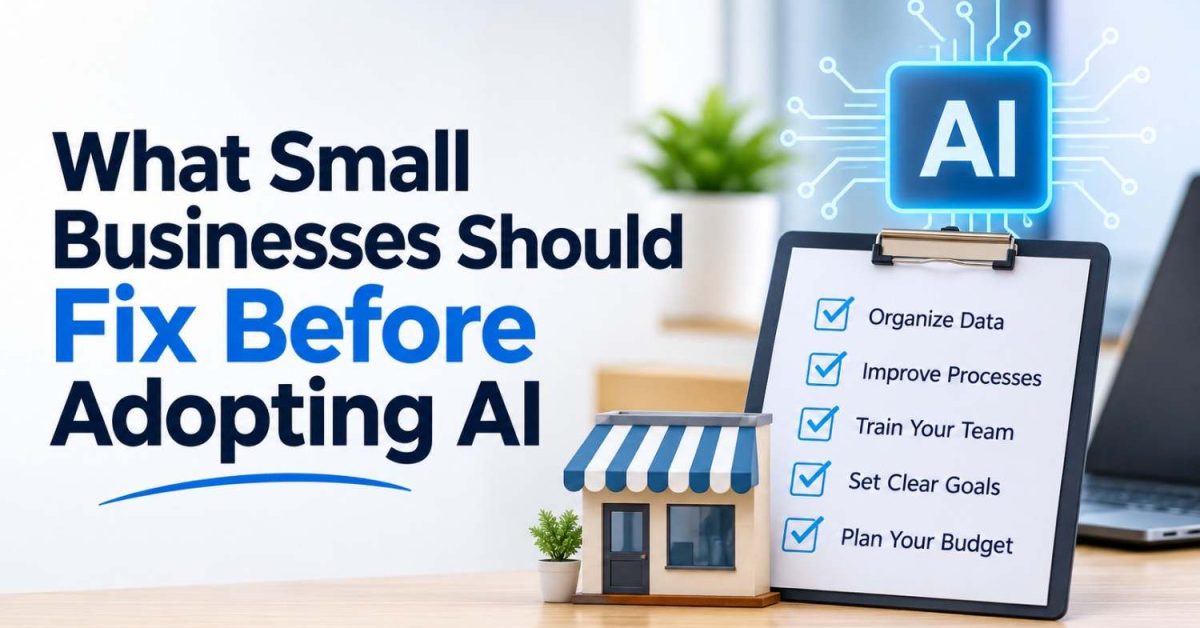
Small business owners often view artificial intelligence as a shortcut to rapid efficiency, expecting plug-and-play tools to fix lingering operational delays, hence why the market is growing 26.6% each year. In practice, adopting software built on predictive algorithms or large language models without a sturdy operational foundation creates friction rather than speed.
Before rolling out automated tools, small companies must address core operational and technical debt. Many small businesses attempt software upgrades without auditing their underlying infrastructure first. When these organizations deploy advanced software onto unstable frameworks, existing inefficiencies become amplified across daily business workflows.
Modernizing Legacy Workflows and Systems
Automation speeds up whatever process it encounters. If an existing workflow relies on manual workarounds, redundant data entry, or ambiguous handoffs, introducing automated software merely accelerates those operational errors.
Organizations must map out daily processes step by step before deploying automated tools. Identifying operational bottlenecks reveals whether a problem requires sophisticated custom software or simply a refined procedure. Upgrading legacy software platforms ensures that new API integrations communicate cleanly without crashing existing operational databases.
Transitioning away from outdated legacy systems also protects business continuity. When legacy tech stacks receive AI-driven workloads, processing delays and sync errors frequently occur. Upgrading hardware and updating core software applications creates the necessary baseline for modern software integration.
Auditing and Cleaning Internal Data
AI applications depend entirely on the quality of the information they process. When databases contain duplicate records, outdated customer files, or inconsistent formatting, automated outputs become unreliable.
Cleaning internal data repositories stands as an essential prerequisite for any software upgrade. Businesses should standardize record-keeping across all departments, establishing clear naming conventions and removing obsolete files. This preparation prevents automated systems from pulling invalid references during routine customer interactions or operational reporting.
Companies must also establish data security protocols before feeding company records into third-party software. Information privacy standards require strict boundaries around proprietary files and sensitive client records. Centralized, clean data storage ensures automated tools deliver accurate results while keeping confidential files secure.
Securing Identity and Access Management
Adding automated software into a business network expands the potential attack surface for security breaches. Many small businesses operate with informal permission structures, allowing employees access to files well beyond their immediate job requirements.
Implementing strict identity access management prevents unauthorized users and external software tools from reaching sensitive core networks. According to research on small business risk management by Total Assure, small enterprise cyberattack volume increased 28% year over year as automated threat vectors targeted under-protected corporate networks. Restricting user permissions to a strict need-to-know basis limits data exposure if a credential becomes compromised.
Strong authentication standards must extend across all company applications. Implementing multi-factor authentication, centralized password management, and regular credential audits helps protect corporate assets as new software tools join the network.
Evaluating Internal IT Capabilities and Infrastructure
Before adopting AI tools, small businesses should determine whether their internal teams can manage system security, employee access, software updates, and ongoing technical support. For San Francisco and Bay Area companies with limited IT resources, a broad range of managed IT services may help address infrastructure management, cybersecurity, and system reliability. Businesses should compare these capabilities with their existing resources before expanding AI adoption.
Local technical environments demand reliable network uptime, fast cloud connectivity, and proactive threat monitoring. Evaluating current internal capabilities reveals clear operational gaps before software deployment begins:
- Internal staff skill sets often lack specialized cybersecurity training required for advanced threat monitoring
- Hardware infrastructure frequently requires bandwidth upgrades to handle real-time data sync demands
- Routine software patching and maintenance fall behind when internal teams focus entirely on daily troubleshooting
Addressing these infrastructure requirements early ensures that digital transformations proceed smoothly without interrupting core operations.
Aligning Vendor SLAs and Software Licensing Standards
Beyond internal infrastructure and security readiness, businesses must audit their external vendor ecosystem prior to integrating automated tools. Third-party software providers often update terms of service to allow customer inputs for model training, creating unintended data exposure risks.
Reviewing software licensing agreements ensures proprietary operational data remains strictly private and protected. Aligning vendor service level agreements with internal operational standards guarantees that software updates or vendor outages will not compromise critical business workflows.
Establishing Ongoing Technical Maintenance Standards
Adopting new software is not a one-time project, but an ongoing operational commitment. Systems require constant monitoring, periodic updates, and regular performance evaluations to remain secure and efficient over time.
Routine maintenance schedules prevent unexpected downtime and software incompatibility. Regular network audits help leadership track system performance, verify backup integrity, and adjust hardware allocations as data demands grow.
Documenting standardized operating procedures for technical support ensures that employees know how to report glitches and resolve software conflicts quickly. A proactive approach to system maintenance protects digital investments and maintains business continuity. Reading through our other posts on AI adoption offers further insight into building a resilient technical foundation for growing businesses.
