
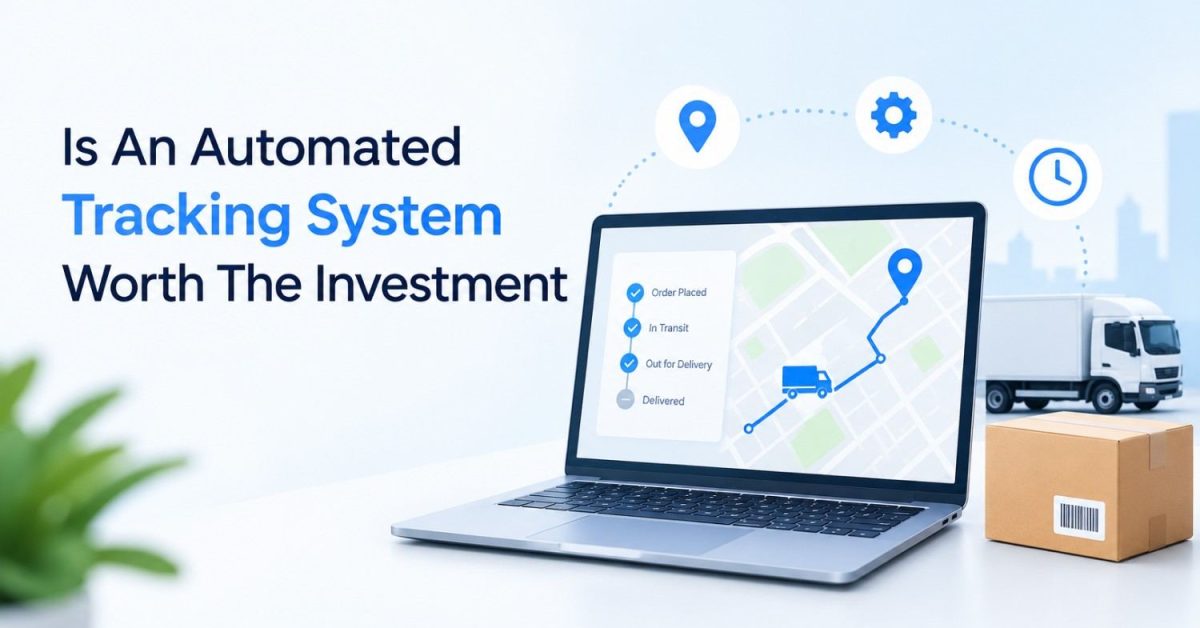
Yes, in most cases. According to IoT Analytics’ IoT Asset Tracking & Visibility Adoption Report 2025 (April 2025), 74% of asset-tracking projects meet or exceed their ROI expectations, at a median spend of $110 per tracked asset per year. In plain terms, tracking pays off when the cost of not knowing where things are is higher than that per-asset fee.
Tracking tends to be worth it when:
- Tools, load carriers, or containers move between staff, vehicles, or sites every day.
- Crews regularly wait for equipment or re-buy items they can’t find.
- Location data can flow into the ERP or maintenance systems your planners already use.
It’s usually a poor buy when assets rarely move, when nobody is responsible for acting on alerts, or when the data would sit in yet another standalone portal.
Why Missing Equipment Costs More Than the Asset Itself
The price of a lost item is rarely the real loss. Samsara’s 2026 State of Connected Operations Asset Theft & Loss Report, based on a survey of 1,500 finance executives in seven countries, found that companies without tracking need 25 days on average to locate a missing asset. The same study ties 72% of loss-related operating costs to small gear such as tools, sensors, generators, and spare parts, not to heavy machinery.
While an item is missing, the bill grows in places that never get booked as theft:
- Overtime and idle crew hours while people search or wait
- Emergency rentals to keep a job on schedule
- Contract penalties when deadlines slip
That’s why the case for automated asset tracking rests less on stopping big thefts and more on cutting the daily drain of small items that vanish and stall work.
This analysis draws on SmartMakers, the Ettlingen-based IoT company behind the thingsHub platform, which connects GPS trackers, BLE tags, and LoRaWAN networks into one asset inventory, to show where tracking budgets pay back and where they quietly don’t.
What Does an Automated Tracking System Really Cost?
The tracker is usually the smallest line on the invoice. What you actually pay depends on the technology, how far your assets travel, and how much integration work sits behind the dashboard.
The Five Cost Lines to Budget For
Every serious quote should split into these parts. If a vendor can’t separate them, you can’t compare offers.
- Tags and trackers: BLE beacons are small and cheap and suit tools that stay indoors. GPS trackers cost more, but they report position outdoors and between sites.
- Connectivity: Cellular plans bill per device every month. A private LoRaWAN gateway is bought once and can cover a whole plant or yard, provided the site has a stable network infrastructure behind it.
- Platform: This is the automated asset tracking software that turns raw location pings into maps, alerts, and inventory records, usually priced per device or per site.
- Integration: Location data only earns money when it lands in ERP, maintenance, or warehouse tools. IoT Analytics found that 74% of adopters connect tracking to ERP for at least one asset type, and integration is the top challenge they report.
- Lifecycle: Battery swaps, moving tags to new assets, and retiring broken devices all cost labor, year after year.
Which Tracking Technology Fits Your Assets?
| Technology | Where It Works Best | How Location Is Captured | Watch-Outs |
|---|---|---|---|
| BLE tags | Tools and stock inside halls and warehouses | Tags broadcast a signal that fixed gateways pick up | Each building needs gateway coverage |
| RFID | Doorways, dock gates, checkpoints | Passive tag is read when it passes a reader | No position between readers |
| LoRaWAN GPS trackers | Plants, yards, campuses, nearby sites | GPS position sent over a long-range, low-power network | Best for periodic updates, not second-by-second |
| Cellular GPS trackers | Trailers and containers on public roads | GPS position sent over the mobile network | Monthly fee per device and higher battery drain |
Where Automated Asset Tracking Pays Back Fastest
An automated tracking system earns its keep through ordinary, repeated savings rather than one big recovery, so the best places to look are the routines your teams repeat every week. Returns show up in five places, and most of them never appear on a theft report:
- Search time: Every hour a technician spends hunting for a drill, a pallet cage, or a calibration kit is a paid hour with no output. Location data turns a search into a lookup.
- Duplicate purchases: When a tool can’t be found, crews buy another one to keep the job moving. Over a year, those quiet repeat buys inflate the equipment budget and add even more items to lose.
- Faster recovery: A tag that reports its position gives security staff a live lead instead of a cold trail. The longer an item is gone, the less likely it is ever to come back.
- Better utilization: Once you can see which load carriers, containers, or machines sit idle, you rent less and buy less. This is one of the same gains driving AI and automation in warehouse and freight operations.
- Condition monitoring: The same device that reports location can also send temperature, fill levels, or pump and motor states, so one installation serves two purposes.
When Automated Asset Tracking Software Isn’t Worth the Money
Most failed projects don’t fail on hardware. They fail on one of three operational gaps, and each one is avoidable if you spot it early:
- Data that stays in a separate dashboard
- Tags placed on the wrong assets
- A system that only its original builder understands
Risk 1: Location Data That Never Reaches ERP or Maintenance Planning
A dashboard that only the project team opens won’t change how the warehouse or the service crew works. If a missing pallet cage doesn’t trigger a task in the system planners already use, the data piles up, and the savings never arrive.
SmartMakers mitigates this through the integration wizards in thingsHub, which forward tracking data automatically to external business systems instead of keeping it in a separate portal.
Risk 2: Tagging the Big Assets and Missing Where the Money Leaks
Vehicles and heavy machinery are the obvious first candidates. But hand tools, meters, and spare parts change hands far more often, so a rollout limited to big iron leaves the most frequent losses untouched.
SmartMakers mitigates this through a single tracker and tag inventory that handles GPS trackers for outdoor assets alongside low-cost iBeacon and Eddystone tags for tools, and lets teams unbind a tag and reuse it on another asset.
Risk 3: A Home-Built System Nobody Can Maintain
Building in-house looks cheaper at first. In practice, home-made tools tend to break down on device updates, integration, and staff training once the original developer moves on.
SmartMakers mitigates this through ready device drivers for trackers such as Abeeway and Digital Matter Yabby, plus LoRaWAN gateway support built with Kerlink, so operations teams don’t have to write or maintain device code themselves.
So, Is an Automated Asset Tracking System Worth It?
The real return doesn’t come from finding one stolen excavator; it comes from the hundreds of small items nobody can find on an ordinary Tuesday. If your teams search, re-buy, and wait for equipment every week, automated tracking pays for itself. Samsara’s 2026 asset theft and loss study found that 95% of tracking users recovered their full cost within 18 months.
Key points to keep in mind:
- Judge the business case on search time, re-buys, and delays, not on theft alone.
- Tag the assets that stop work when they go missing, whatever their price.
- Make integration with your existing systems a condition of purchase, not an add-on.
SmartMakers built thingsHub for exactly that problem: one platform for trackers, tags, and networks that sends location and condition data straight into the tools your planners and technicians already use, starting with a single site and growing from there.
FAQ
How much should I expect to pay for an automated asset tracking system?
IoT Analytics’ 2025 adoption report puts the global median at about $110 per tracked asset per year, covering hardware, connectivity, and software across many technologies. Simple BLE tags on indoor tools cost far less than that, while GPS trackers on trailers or containers cost more.
What’s the difference between GPS, RFID, and BLE tracking, and which one do I need?
RFID tags are passive and only register when they pass a reader, so they suit doorways, dock gates, and checkpoints. BLE tags send a signal every few seconds that nearby gateways pick up, which works well for tools and stock inside buildings. GPS trackers work outdoors and between sites, sending their position over LoRaWAN or cellular networks. Many companies mix two of them, and the right choice depends on where your assets actually travel.
Can a small business benefit from automated tracking?
Yes, as long as items move between people, vans, or sites and sometimes go missing. A small firm doesn’t need to tag everything; starting with the 20 or 50 items that cause the most delays is often enough to prove the case. Cloud platforms and per-device pricing mean the upfront cost stays modest, and the pilot results show quickly whether a wider rollout makes sense.
How long does it take before I see a return?
It depends on how much time and money your teams lose to missing items today. Payback comes fastest where search time and replacement buying are highest, such as construction, field service, and multi-site logistics.
Do I need to track my employees, or just the equipment?
You can get most of the value from tracking equipment alone. Worker tracking can help with safety and time-on-task reporting, but it raises privacy and works-council questions, especially in Europe.
